A common federal example
For covered, nonexempt employees under the Fair Labor Standards Act, federal law generally requires at least 1.5 times the regular rate for hours worked over 40 in a workweek. Exemptions and special rules can apply.
Simple hourly example
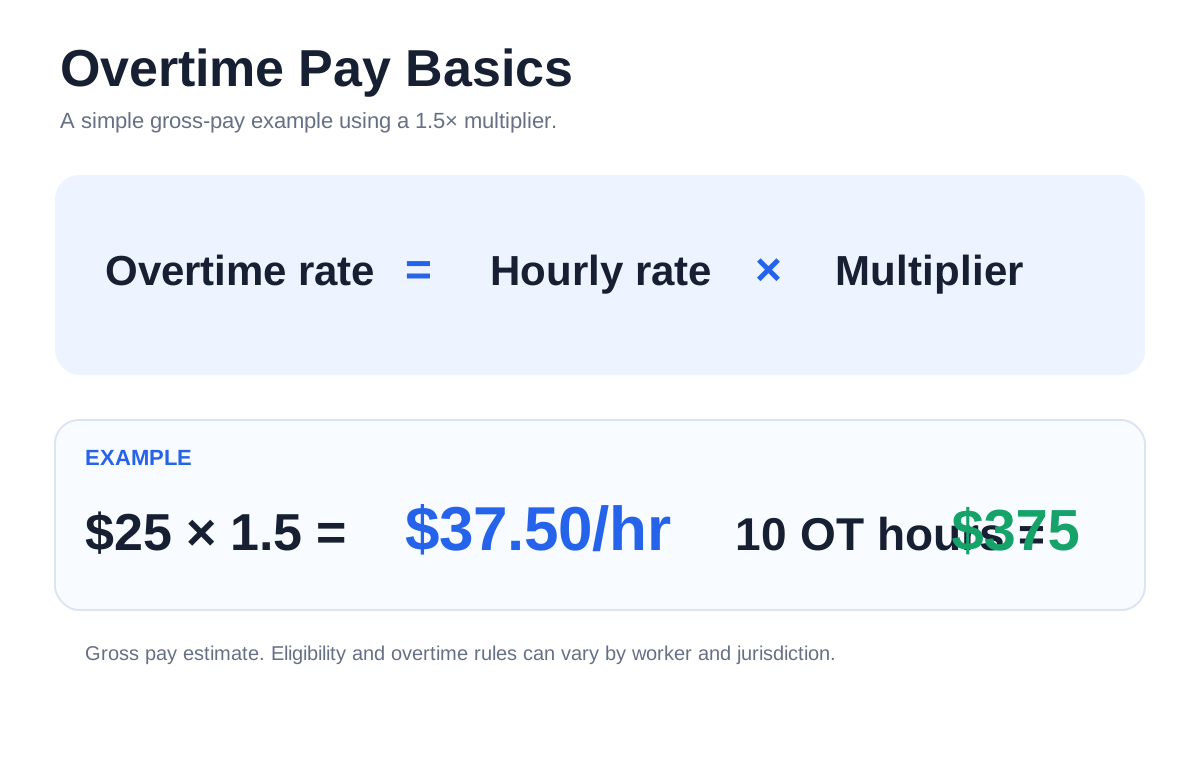
At $25 per hour, a 1.5× overtime rate is $37.50. If a worker has 10 qualifying overtime hours, those hours would add $375 in this simple example.
The regular rate can be more complicated
Some compensation can affect the regular rate used for overtime calculations. State laws can also provide different or more protective rules. That is why our overtime multiplier is adjustable and why the calculator is presented as an estimate.
Official reference: U.S. Department of Labor, Fact Sheet #23.